📧 from CT counsel: "strongly disagree that the image stereotypes or dehumanizes"
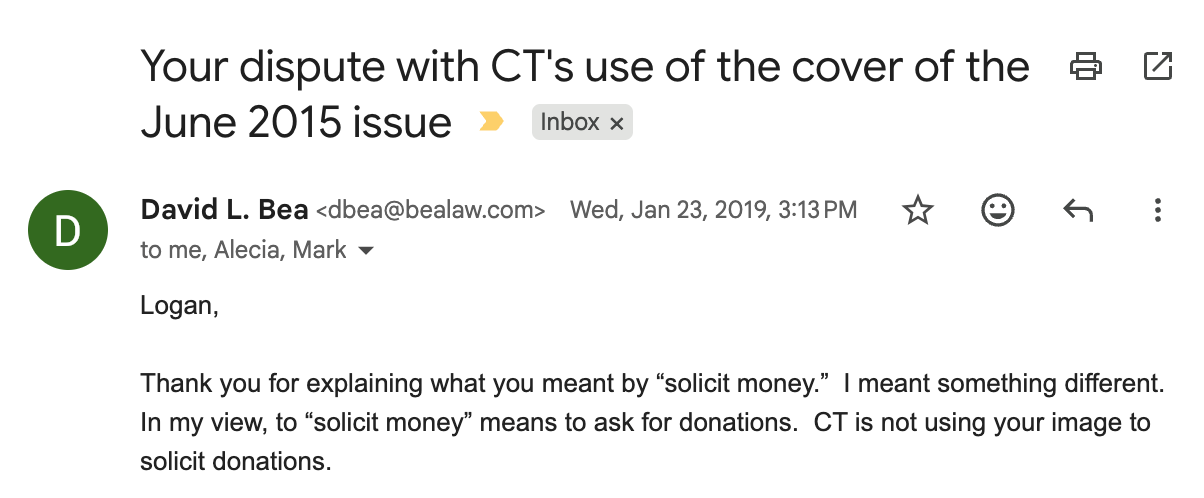
Thank you for explaining what you meant by “solicit money.” I meant something different. In my view, to “solicit money” means to ask for donations. CT is not using your image to solicit donations.
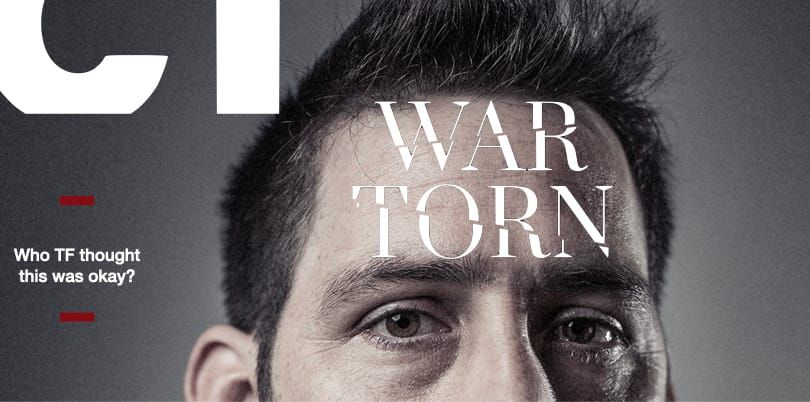
To produce the screen shot that you sent, you must have tried to access the online archive of your article or another article from the June 2015 issue. The cover of the issue you were looking for was displayed on the paywall. That’s not the same as using your image to solicit subscriptions generally. CT does not do that. Only if the user is trying to obtain an article from the June 2015 issue would the user see the cover of that issue. If you are trying to access an article from another issue, you will see the cover of that particular issue. That is the normal and reasonable practice of magazine publishers. The cover is essential to identify the issue the reader wants to find.
In reviewing the emails between you and the CT staff working on your photoshoot and article in 2015, I see no evidence that you implicitly or “explicitly withheld permission to use [your] image to convey ‘pain,’ ‘darkness,’ and whatever it was Sharp thought was ‘the toll of war and moral injury’.” We strongly disagree that the image stereotypes or dehumanizes American veterans. You posed for a photo shoot and consented to the use of your image. CT relied on your consent and CT is justified in continuing to rely on your consent. They have the legal right to use the cover of the issue the way they have used it.
That said, my client has learned that they have the ability to remove the photo of the June 2015 issue from the paywall. In an effort to satisfy you, they’ve taken the unprecedented step of removing the cover image from the paywall for those seeking articles from that issue. We trust this will resolve this matter.