May God Have Mercy on the House of Ignatius
A Fellow-Soldier's Lament
I. The Soldier Who Became a Saint
In 1521, a Spanish soldier named Íñigo López de Loyola stood defending the fortress at Pamplona when a French cannonball shattered his right leg and wounded his left. He was 30 years old, a soldier who dreamed of glory, a man who had bet his life on honor and battle.
The injury ended his military career. During months of painful recovery, he read the only books available: lives of Christ and the saints. Something changed in him. The soldier who had pursued worldly glory began pursuing what he called "the greater glory of God" and founded the Society of Jesus.
The Jesuits were born from a wounded soldier's conversion. Ignatius understood suffering, service, and sacrifice because he had lived them. He founded an order not to build institutions but to serve the marginalized wherever they were found. "Contemplatives in action," he called them. Not managers of empires, but servants of the gospel.
Five hundred years later, I wonder if Ignatius would recognize what his order has become.
II. The Blood That Cries Out
Every day in America, between 17 and 44 military veterans kill themselves. The range is wide because the VA has institutional incentives to undercount, and independent researchers struggle to get accurate data. But even if we use the conservative estimate of 17 per day, that's more than 6,000 veterans per year.

From Mission Roll Call, click for source.
When the prophet Jeremiah witnessed the destruction of Jerusalem in 587 BCE, fewer than 5,000 inhabitants were slaughtered. Every year, we experience another cataclysm of Biblical proportions. Every year, the blood of my dead battle buddies cries out from the ground.
Do you hear them, or haven't you been listening?
I'm an Iraq War veteran, service-connected disabled, with two graduate theology degrees. I have spent an entire decade advocating for comprehensive civil rights protections for military families. Not because I enjoy litigation or political battles, but because I know what it feels like when American democracy treats soldiers as props for patriotic performances while denying us the rights we supposedly secured.
Here is what most Americans don't know:
The Equal Employment Opportunity Commission explicitly excludes active-duty service members from Title VII employment discrimination protections. You can fire a veteran for being a veteran, there's no law against it.
The 2009 Hate Crimes Prevention Act included military status (18 USC § 1389) as a protected class. The Department of Justice has never fully enforced in 15 years, despite documented cases of anti-military hate crimes.
California added military and veteran status to state civil rights law in 2013 when Kamala Harris was Attorney General. It remains unenforced today.
Congressional inquiries to the DOJ and FBI about civil rights enforcement for military families go unanswered. Representative David Trone asked in 2019. Senator Ron Wyden asked in 2024. Silence.
Without civil rights protections, the social death of past and present service members is but a prelude to physical death. Suicide becomes plausible, palatable, even inevitable, once human dignity is extracted from a marginalized community.
I have spent ten years knocking on institutional doors. Veterans organizations, civil rights groups, media outlets, elected officials, faith communities. Everyone says the work is "valuable." Everyone says "keep pushing." No one actually risks institutional capital to help.
Including the order founded by a wounded soldier.
III. The Institution Protects Itself
In 2024, I filed an IRS complaint against America Media, believing they were violating nonprofit regulations governing tax-exempt status. I won't relitigate that complaint here. What matters is what I didn't understand at the time:

America Media is not "a Jesuit publication" in the way The New York Times is "a newspaper." America Media is an official apostolic work of the Society of Jesus. It is a sponsored ministry, a platform designated by the Jesuit Conference as a priority mission. The U.S. Provincials "tax" their own manpower to staff it with talented Jesuits. When I challenged America Media, I didn't challenge "a magazine." I challenged a Jesuit apostolate.
The Society of Jesus closed ranks on military families, the same group that birthed the order itself.
Recently, I reached out to a prominent Jesuit priest seeking help bringing military family civil rights into public discourse. He is a well-known advocate, someone who has shown extraordinary courage defending LGBTQ+ Catholics despite intense institutional pressure. He told me the work was "valuable." Then he told me his Provincials had asked him not to "wade into areas other than my ministry" because he was already "controversial."*
I thanked him and said I understood. And I do understand. He is caught in institutional machinery far larger than himself. He has spent his political capital on one marginalized community that needs help, and he cannot spend more on another without jeopardizing his own important and life-saving ministry.
But let's be honest about what "Provincials" means in this context. When an American Jesuit says "my Provincials have asked me," he is referring to the leadership of the East Province in particular and, by extension, the institutional muscle that protects 'apostolic' works like the New York-based America Media empire. The same that threw its religious weight around in support of a political party, possibly at the expense of democracy itself.

The message was unmistakable: You challenged our institution. We will not help you.
This is not about one priest's capacity. This is about institutional retaliation disguised as resource constraints.
IV. The Prophets Would Not Be Silent
The prophet Jeremiah stood at the gates of the Jerusalem temple and proclaimed: "Do not trust in deceptive words: 'This is the temple of the Lord, the temple of the Lord, the temple of the Lord'" (Jeremiah 7:4).

Detail of Jeremiah on the ruins of Jerusalem by Horace Vernet, 1844.
The people believed that because they had the temple - God's house - they were safe. The institution itself was their security. Jeremiah told them they were worshiping the institution instead of living the covenant. They were committing idolatry with religious language.
The prophet Amos heard God say: "I hate, I despise your religious festivals; your assemblies are a stench to me... But let justice roll on like a river, righteousness like a never-failing stream!" (Amos 5:21, 24).

Detail of Amos, in Le Grande Bible de Tours by Gustave Dore, 1866.
God was not impressed by their liturgies, their institutions, their proper procedures. God wanted justice 👏 for 👏 the 👏 marginalized.
Joshua+ stood in the temple and overturned the money changers' tables. He called the religious leaders "whitewashed tombs" - beautiful on the outside, full of death inside (Matthew 23:27). He was executed by the institutional authorities who felt threatened by his witness.
The prophetic tradition is clear: When institutions prioritize self-preservation over mission, they have abandoned God's work. When they close ranks against critics instead of examining their consciences, they prove the critics' point.
The Jesuits are protecting their 'apostolic work' from external challenge. Meanwhile, 17-44 veterans die by suicide every day. The institution thrives while the marginalized die.
This is exactly what the prophets condemned.
V. My Own Complicity
I cannot indict the Jesuits without indicting myself; I filed an IRS complaint without understanding the institutional weight of what I was challenging. I did not realize the full scope of the institution I was confronting.
But more than that: I have spent ten years seeking institutional approval for this work. I have tried to be "reasonable," to work within systems, to not be "too controversial." I have prioritized being taken seriously by institutions over speaking the truth.
I have been silent when I should have spoken. I have compromised when I should have stood firm. I have sought validation from the powerful instead of solidarity with the powerless.
This is my repentance for that silence. This is me publicly owning that I've been negotiating with the cool kids on the playground who want to keep beating up my little brother or sister. This is me taking a swing at them instead of waiting for them change.
This is me taking responsibility for those younger, or smaller, or weaker than me.
And this is my invitation to the Jesuits - and to all of us who claim to follow Christ - to "examen" our own complicity in institutional idolatry.
VI. A Call to Return
Ignatius of Loyola was a soldier before he was a saint. He understood the cost of service. He knew what it meant to bet your life on something greater than yourself.
He founded an order to serve the marginalized wherever they were found. Not to build ("media") empires. Not to protect institutional reputations. Not to close ranks against critics. To serve, āḇaḏ, the first vocation of humanity.
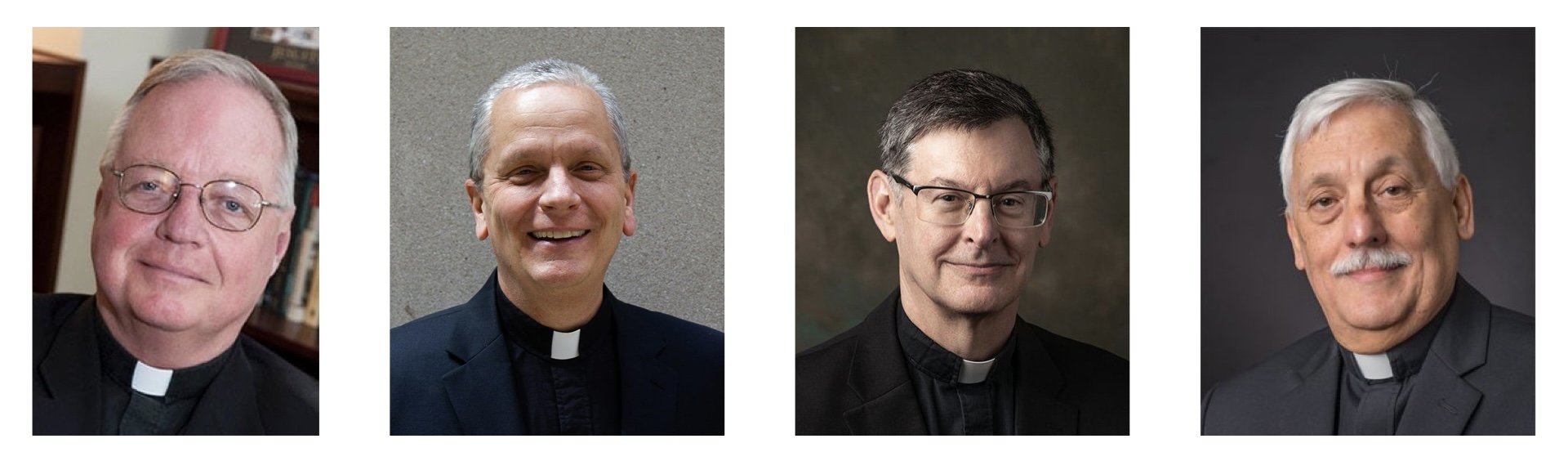
Jesuit Provincials for the East Joseph O'Keefe (outgoing) and Robert Reiser (incoming), Conference President Brian Paulson, and Ignatius' 30th successor Arturo Sosa.
The contemporary Jesuits are managers of institutions. They are skilled at preservation, at brand management, at resource allocation. They know how to protect their apostolic works from IRS complaints and public criticism.
Ignatian spirituality has lost any claim to be forming soldiers of Christ or a company for [Joshua].
I do not write this to condemn individuals. The Jesuit priest who told me he couldn't help has shown more courage than most in his advocacy for LGBTQ+ Catholics. He is trying to be faithful within an impossible institutional context. And I admire his moral clarity and his moral courage.
I write this to name the systemic failure: The Society of Jesus has chosen to protect its institutions over serving its mission.
This is a choice. It can be unmade.
Jesuits: Return to your founding charism.
The order that began as "companions" with a soldier near death should serve soldiers at death's door.
The Society that claims to be "contemplatives in action" should act for justice, not just manage institutions. You do not need my permission or my approval to do this. You do not need to help me personally. But you do need to ask yourselves: What would Ignatius do?
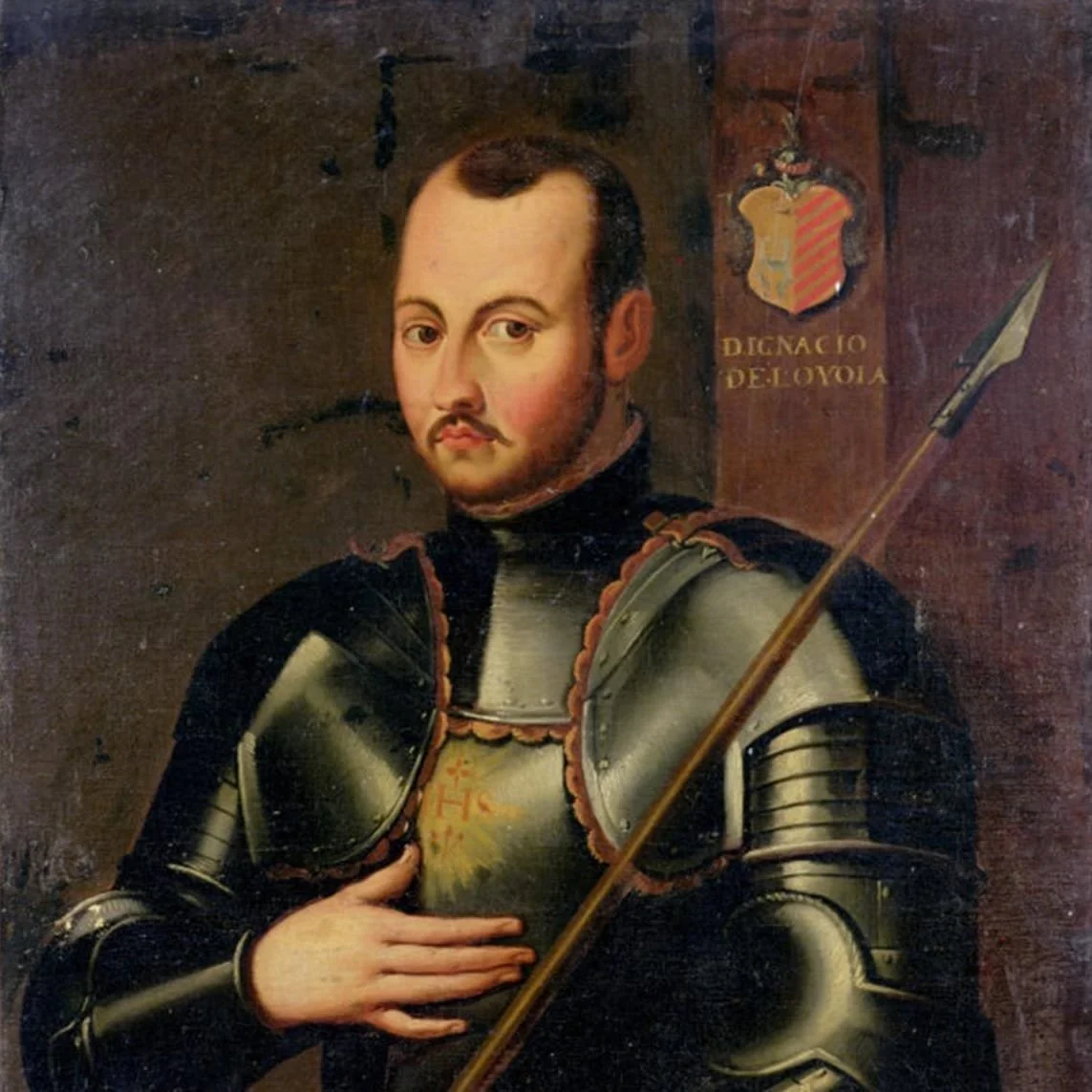
Would he protect America Media from an IRS complaint, or would he ask if the complaint had merit?
Would he tell a fellow-soldier for the marginalized that he was "too controversial" to help, or would he risk institutional capital for the mission?
Would he preserve the institution, or would he serve the gospel?
You know the answer, and so does our God. If you serve Him, prove it.
VII. The Blood Still Cries Out
Seventeen to forty-four veterans kill themselves in America every day. Their blood cries out from the ground, just as Abel's blood cried out to God.
God hears it. I hear it. I made sure the Jesuits heard it too.
The question is whether the house of Ignatius will listen to the deafening roar of the blood of thousands of soldiers like Ignatius. Or if it is a house divided against itself, against its own founder.
I challenged the institution. It closed ranks. When I asked for help, the institution said "no." Not because the work lacks merit. But because I, a humble Hospitaller, had challenged it's institutional power.
This is the choice before you: Protect the institution, or serve the mission.
You cannot do both.
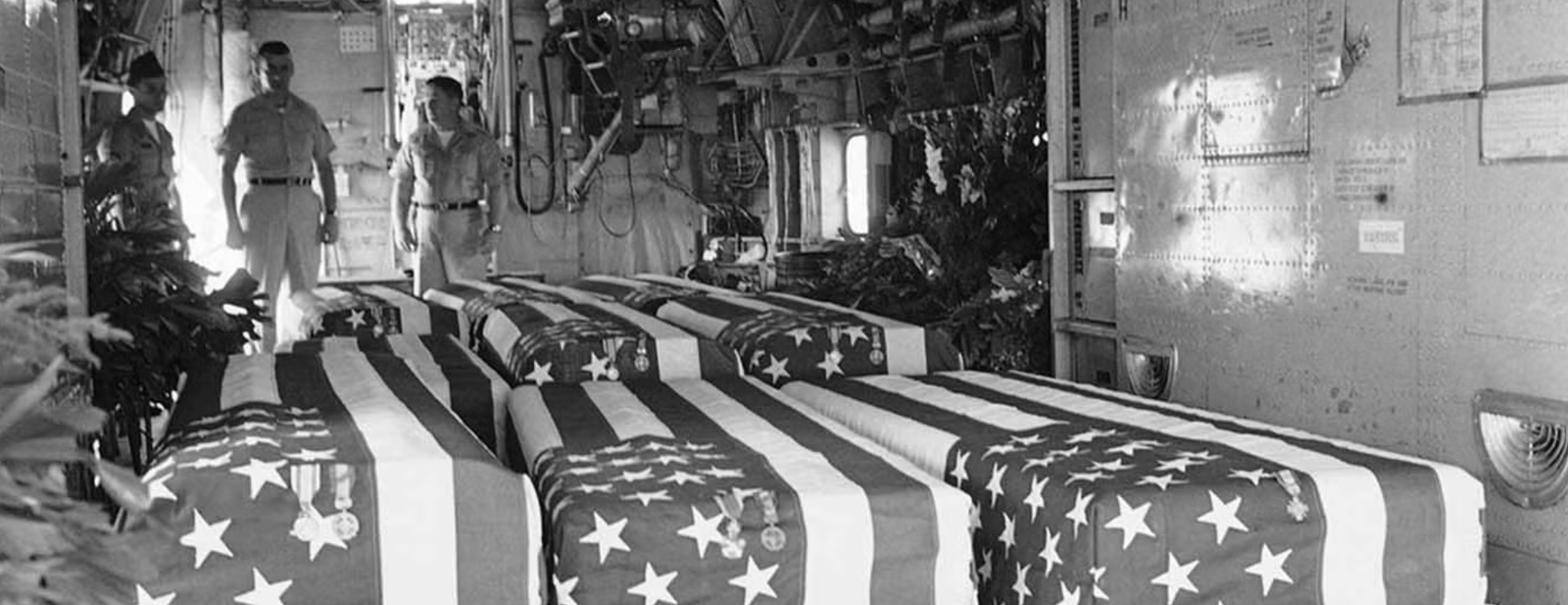
Flag-draped coffins of eight American Servicemen killed in attacks on U.S. military installations in South Vietnam, on February 7, are placed in transport plane at Saigon, February 9, 1965. Click for source. I dare you.
May God give us all - myself included - the courage to choose mission over safety, service over self-preservation, faithfulness over comfort.
May God have mercy on the house of Ignatius.
And may God give christians the courage to return to our founding missions before it's too late.
*After publication, the individual referenced requested removal of this documentation. I declined because it's essential evidence of institutional decision-making affecting veterans' lives.
Logan M. Isaac is a service-connected disabled combat veteran with two graduate theology degrees. He has a federal civil rights case pending in Oregon (Isaac v. Boshart Davis, et al., No. 6:25-cv-01159-MC) alleging First Amendment retaliation by state legislators who killed military family civil rights legislation. He runs The Chapter House in Albany, Oregon, and is the father of two children. This essay reflects his personal views and vocational witness.