Damien Rodriguez (pt. 3): "The Law Nobody Read"
GIJustice Denied: Damien Rodriguez, Pt. 3
TL;DR — The New York Times nationalized a story built on a false legal premise, amplified it to millions through its flagship podcast, and never corrected it. Meanwhile, the federal law that could have protected Damien Rodriguez — the same law misused to destroy him — went unread by everyone whose job it was to know it existed.
On October 18, 2017, Dave Philipps published "A Marine Attacked an Iraqi Restaurant. But Was It a Hate Crime or PTSD?" on the front page of the New York Times. It is a more careful piece than anything Portland's press produced in April of that year. Philipps gave Rodriguez's combat history serious space. He named the veterans court exclusion. He quoted Ghaith Sahib's grief without flattening it. He asked a question the Portland coverage never bothered to ask.
He also repeated the central error of every piece that came before it.
The Headline's Premise Is False
The headline assumes "hate crime" is a meaningful legal category in this case. It is not. As established in Part 1 of this series, no law in the Oregon Revised Statutes has ever carried that name. The relevant Oregon statute — ORS 166.155, Intimidation II — was a misdemeanor in 2017 and was not amended to "Bias Crime" until 2019. The only applicable federal hate crimes law was the Matthew Shepard and James Byrd Jr. Hate Crimes Prevention Act of 2009. No federal charges were ever filed.
Philipps knows about HCPA. He discusses it in the piece. That is precisely what makes the omission that follows so significant.
The Section Nobody ..."Found"(?)
HCPA was passed as Division E of the National Defense Authorization Act for Fiscal Year 2010. Within that division, tucked into a section that has received no coverage in the decade and a half since its passage, is Section 4712 — also known as the Soldiers Amendment, or more precisely, the provision that extended federal hate crime protections explicitly to members of the uniformed services and their families.

In plain terms: military families have been a federally protected class under HCPA for fifteen years..!
Senator Jeff Sessions introduced the provision on July 9, 2009, likely as a “poison pill,” betting that a pro-military amendment would make the bill less palatable to progressives; the same tactic used by Rep. Howard Smith when he put “sex” in the 1964 Civil Rights Act. Congress passed HCPA with the Soldiers Amendment intact, protection which is real. It is standing federal law. And it is sitting in the same statute Philipps cited in his front-page story.
He apparently never found it. Maybe because he never looked for it, which would suggest he had the story already mapped out in his head. That’s literature, not journalism.

Neither of Philipps' two Pulitzer nominations was for fiction.
Ignoring an entire statutory citation is not a minor oversight. The entire framing of Philipps' piece — and of every piece before it — turns on the question of whether the HCPA framework applies to Rodriguez as a perpetrator. Nobody thought to ask whether it applied to him as a victim. A decorated Sergeant Major with four combat deployments, a documented PTSD diagnosis, and no prior criminal record, subjected to a media narrative built on a false legal premise that effectively barred him from the one court designed for people exactly like him — that is, at minimum, a question worth asking under a law that exists specifically to protect people in his position.
Nobody asked it. Not his defense attorney. Not the DA. Not the New York Times. Not the U.S. Commission on Civil Rights, which has jurisdiction over exactly this kind of enforcement gap. Nobody read far enough into the statute to find the section that might have changed everything.
What the The New York Times Told Millions
On November 3, 2017, The New York Times adapted Dave Philipps' front-page story on Damien Rodriguez for The Daily, its flagship podcast hosted by Michael Barbaro. At the time, The Daily was among the most downloaded podcasts in the United States. The episode ran approximately 34 minutes.
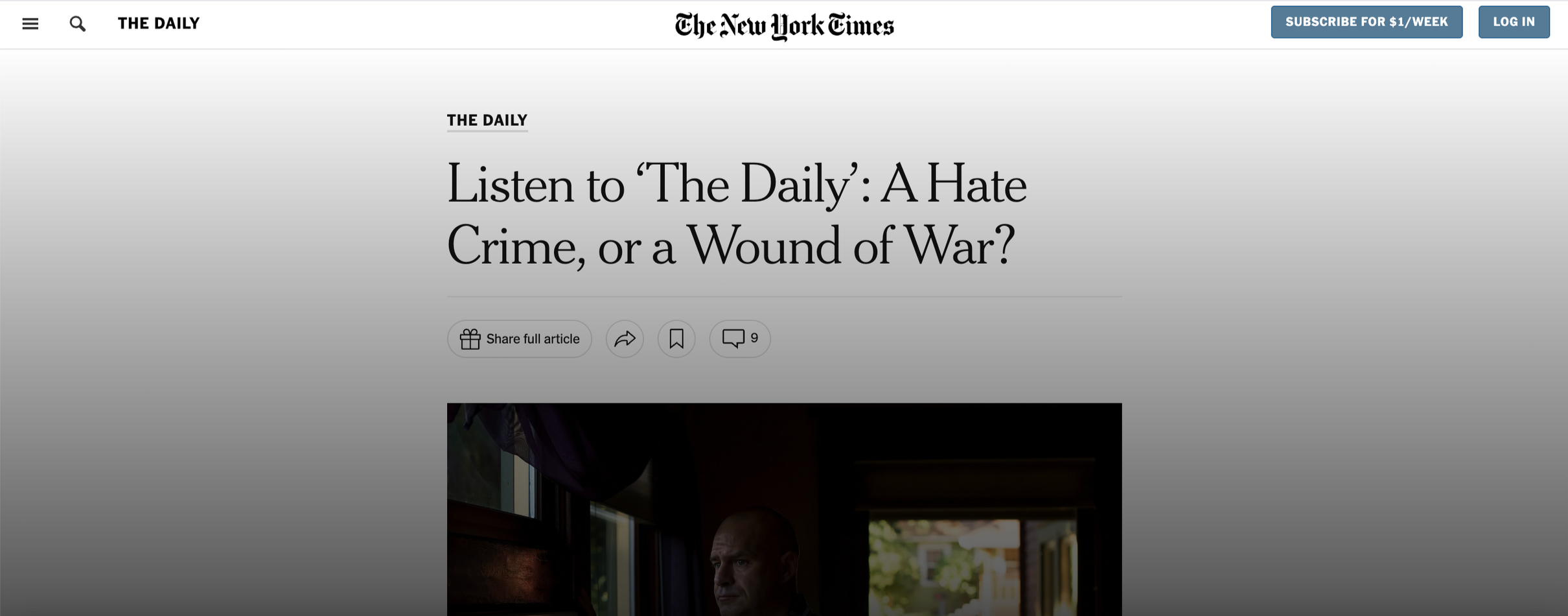
As of March 30, 2026, the episode no longer appears to be publicly accessible on Spotify or Apple Podcasts. Following the NYT's September 2024 migration of archived episodes behind a subscription paywall, episodes from 2017 require a paid NYT account to access. The companion article remains available to paying subscribers at nytimes.com.
I possess a full transcript of the episode. It is preserved as documentary evidence in the face of a Free-from-accountability Press. What follows are direct quotations relevant to the false legal characterizations documented in this series, reproduced here as criticism and commentary under fair use.
What David Philipps told The Daily listeners:
Explaining the prosecution's charging decision, Philipps narrated:
prosecutors "increase the charges on him from misdemeanor charges — where he probably would have gotten probation — to a hate crime, essentially a bias-related crime, and felony-level assault."
That framing, delivered as explanation rather than allegation, told a mass audience that a hate crime framework had been legitimately applied. It had not. As established in Part 1 and Part 2 of this series, no such law existed in Oregon. The legal premise was invented by a police spokesperson, amplified by The Oregonian, and by the time it reached Philipps' narration it had become scaffolding — load-bearing, unexamined, and false.
What Ghaith Sahib actually said:
Barbaro asked Sahib directly: "Do you think that what he did was a hate crime?" Ghaith answered: "I really, I don't know."
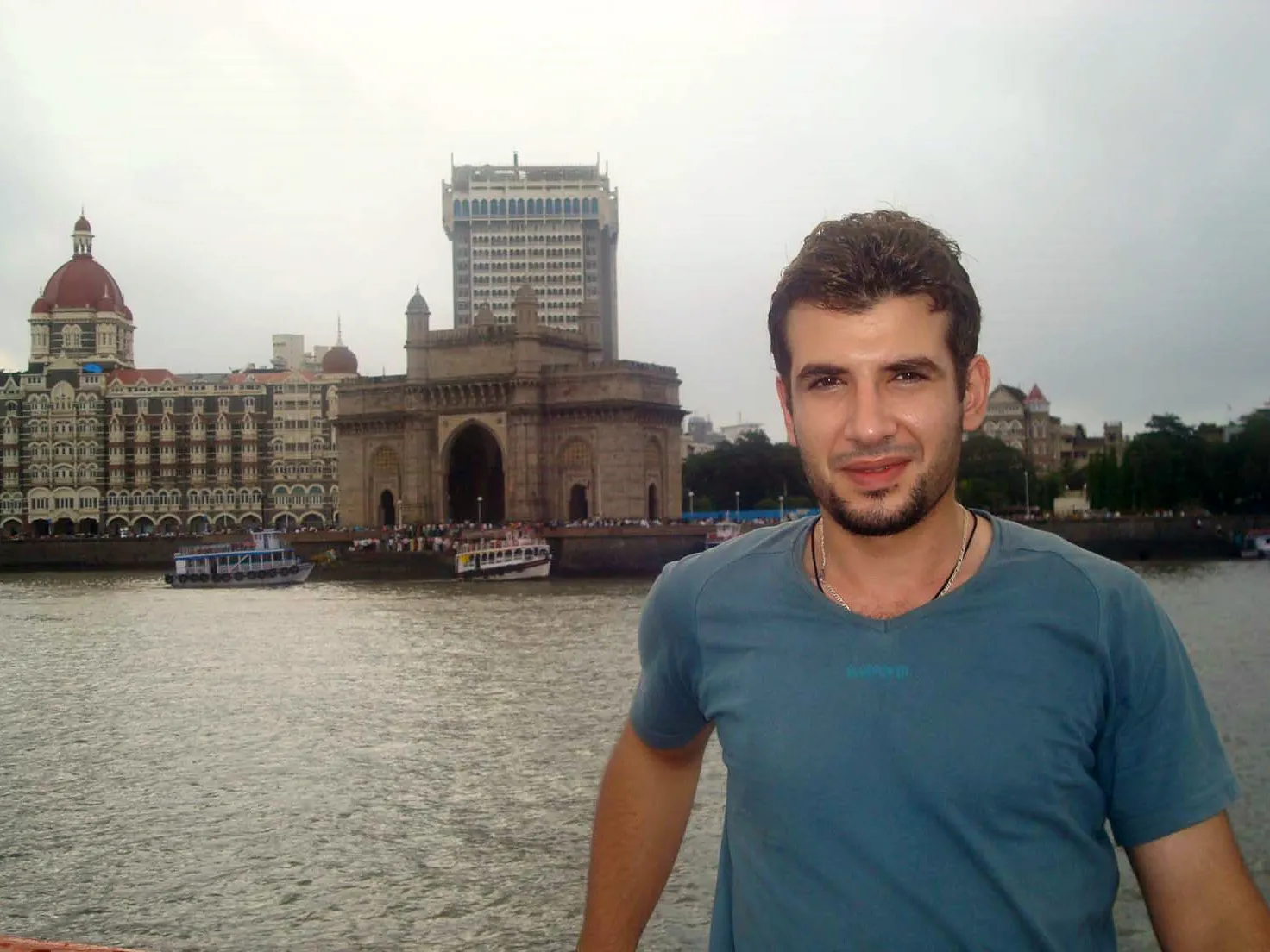
Ghaith in Mumbai, in front of the Gateway of India, in 2007. Click for source.
He said he felt sorry for Rodriguez, that he hoped the Marine could get help. He said: "I really don't have any problem with him."
What Barbaro added:
Barbaro's closing narration described Intimidation II — ORS 166.155, the misdemeanor bias charge — as "Oregon's equivalent of a hate crime." It is not, and was not in 2017. It remains a misdemeanor. The false characterization, now in Barbaro's own voice, was the last thing millions of listeners heard before the episode ended.

Michael Barbaro would have you believe he knows state and federal law. Click for source.
The podcast told its audience Rodriguez faced a mandatory prison sentence if convicted. The sentencing judge gave him probation and fines. That correction reached none of the millions who heard the episode.
The episode is where the false legal premise stopped being a Portland story and became a national one — narrated, in the voices of the people who lived it, to an audience that had no reason to question the legal framing. The distinction between the misdemeanor bias charge and the felony assault charge is precisely what the coverage consistently collapsed, and Barbaro collapsed it again for the largest audience yet. The New York Times’ multiple headlines, and what millions of listeners took away, was the false “hate crime” frame of reference, the same clearly biased conclusion that Ghaith, the Iraqi owner caught in the middle, refused to confirm.
What the Judge Knew
On March 12, 2018, Damien Rodriguez entered a guilty plea. The sentencing document from Multnomah County Circuit Court tells a story the press never followed up on.
After a Grand Jury that expanded his victim count, a forty-seven-fold increase in bail, a felony indictment that closed the veterans court door, and a prosecution that the New York Times reported was pushing for prison time — the judge gave Rodriguez supervised probation and restitution fines. No incarceration. No jail time.
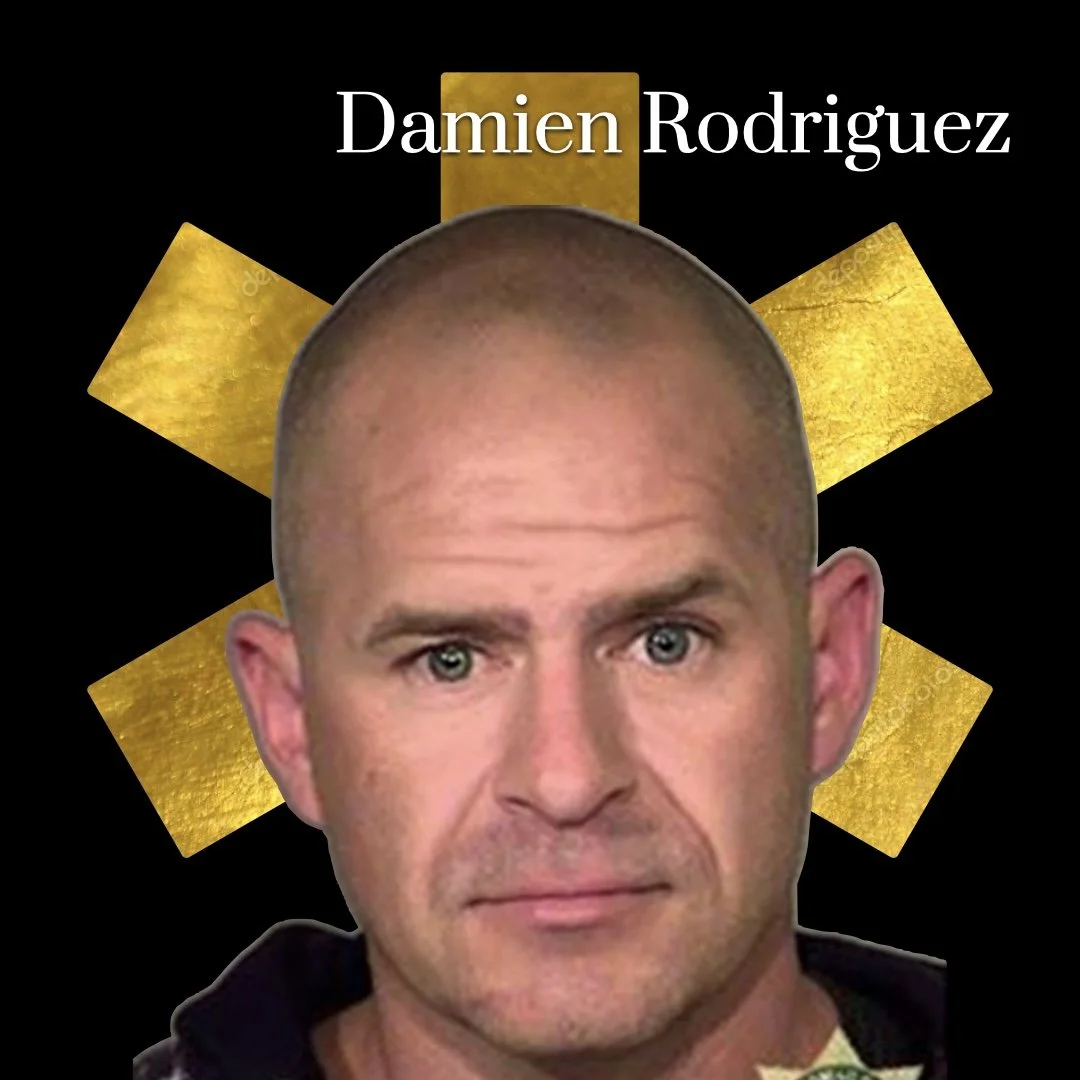
Damien Rodrigues may not be a saint, but he's not a hate criminal either.
The two employees who were directly harmed received compensation: Badran Hamood, the employee struck by the chair, was awarded $11,000. Shaymaa Alquriqchee, who did not appear in the case until the July 2017 re-indictment, received $10,000. Both awards were appropriate. Both employees deserved them.
What the sentencing tells us, reading between the lines of a document that speaks in legal shorthand, is that the judge looked at the totality of Damien Rodriguez's life and record and concluded that prison was not the answer. The system, at the last possible moment before the door closed permanently, partially corrected itself.
By then it was too late for veterans court. The felony was already on his record. The narrative had already traveled to millions of people. The law that could have protected him had already gone unread by everyone in the nation.
The Law as a Progressive Weapon
There is a particular cruelty in what happened here that I want to name plainly.
The Matthew Shepard and James Byrd Jr. Hate Crimes Prevention Act was passed, in part, because communities targeted for violence had been failed by local law enforcement and local press. The federal framework exists because the pattern of institutional indifference to bias-motivated harm was too consistent to be accidental.
Section 4712 was added because military families face exactly 👏 that 👏 pattern. The data is not ambiguous. EEOC excludes them. Fair Housing excludes them. The Department of Education excludes them. When they seek recourse through the Department of Labor, they face disproportionate denial rates despite being the agency's largest group of protected complainants. The Soldiers Amendment passed unanimously during the same Senate floor debate in which it was introduced.
What happened to Damien Rodriguez is a case study in what Section 4712 was written to address: a protected member of the military community, subjected to a media and prosecutorial environment shaped by institutional indifference to his actual legal status, denied the specialized court designed for his precise situation, and never once afforded the protection the law specifically extended to him.
Instead, HCPA's language was borrowed — misnamed, misapplied, stripped of its context — and used to build the narrative that destroyed his career and his access to treatment.
The law was not applied as a defensive shield. It was wielded, by people who had not read it, as a bludgeon by a progressive machine derelict its "unique Constitutional position" as members of the so-called "Free Press."
Where Damien Rodriguez Is Now
I don't know.
I have looked. I found no death record in the county of his last known residence. His former attorney, reached on LinkedIn, was not exactly interested in talking. Ghaith Sahib's family gave me his contact info, but my correspondence went unanswered. The New York Times ran a front-page story about him, adapted it for a podcast with millions of listeners, and as far as the public record shows, never followed up.
Somewhere there is a man — a Sergeant Major, four deployments, a chest full of decorations, a PTSD diagnosis, and a probation sentence — living with what happened to him in Portland in 2017 and what the press made of it afterward. Whether he found treatment. Whether he found peace. Whether he knows that the law that was misused against him was also the law that was supposed to protect him. I don't know any of it.
That absence is itself a verdict on how this story was told.
The Reconciliation That Didn't Happen
Ghaith Sahib said he wanted to speak with Damien Rodriguez directly. Rodriguez had offered to apologize. By the time the Times ran its piece six months after the incident, that conversation still hadn't happened. The family was described as “hesitant.” Tiffany Sahib spoke for that hesitation on the record. Ghaith did not.
Two men shaped by the same war — one who fought in it, one who survived it and built a restaurant to bridge the distance it created — were never given the space the press could have offered them, because the press had already decided what the story was and went for leftist click bait rather than centering complicated humanity.
The story told by the press was false, full stop. The law everyone invoked had a section nobody read. The man they called a hate criminal was protected by the same statute they misused to condemn him. The judge who sentenced him apparently understood that prison wasn't the answer. The veterans court that might have healed him was already closed by the civilian bias that had already decided his fate.
This series began because I believe Damien Rodriguez deserved better than what the press gave him. It ends with the same belief, and with a demand directed at every institution that touched this case and failed him:
Read the law. All of it.
The protection was always there. It still is. And the next Damien Rodriguez is out there right now, waiting for someone to use it on his behalf.
Help #GIJustice by taking action:
Contact the Portland Police Bureau Public Information office and demand they take responsibility for mischaracterizing ORS 166.155.
📞 503-823-0000
Email The Oregonian director of public interest and accountability Laura Gunderson and demand a retraction and an apology to Damien Rodriguez.
Email New York Times Standards Editor and demand a correction to the October 18, 2017 Philipps piece.