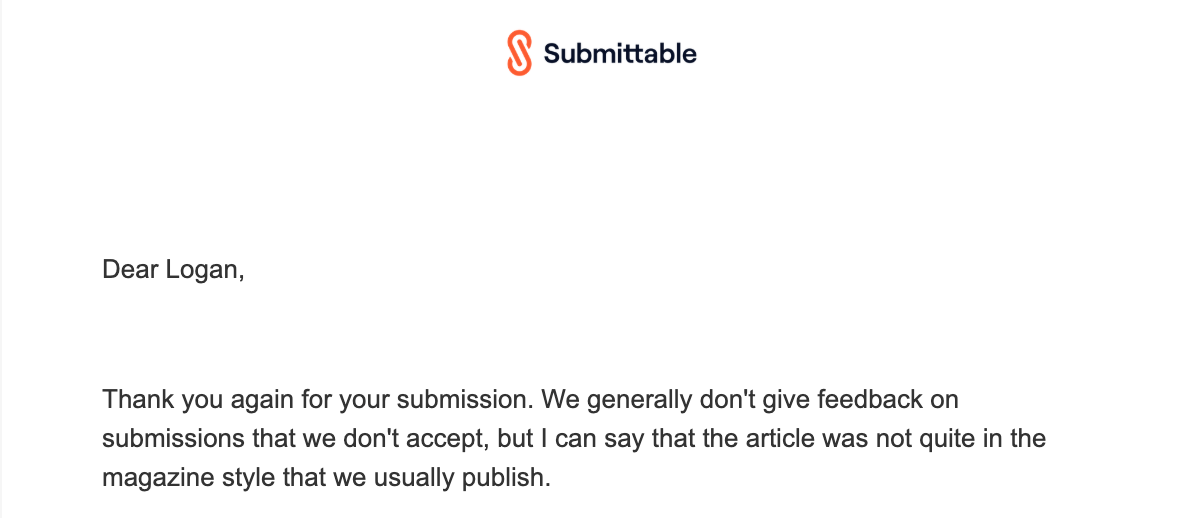
"Thank you again"
On Kept Gates and Civilian Bias
There is a kind of rejection that tells you something the editor didn't mean to say.

I recently submitted a theological essay to a major Catholic magazine — one with a long history of serious engagement with the intersection of faith, politics, and embodied life. The piece argued that a century of Christian reflection on war and military service has been conducted almost entirely from the outside: by civilian scholars reading soldier saints, by pacifist theologians critiquing military institutions, by ethicists parsing just war criteria in seminar rooms.
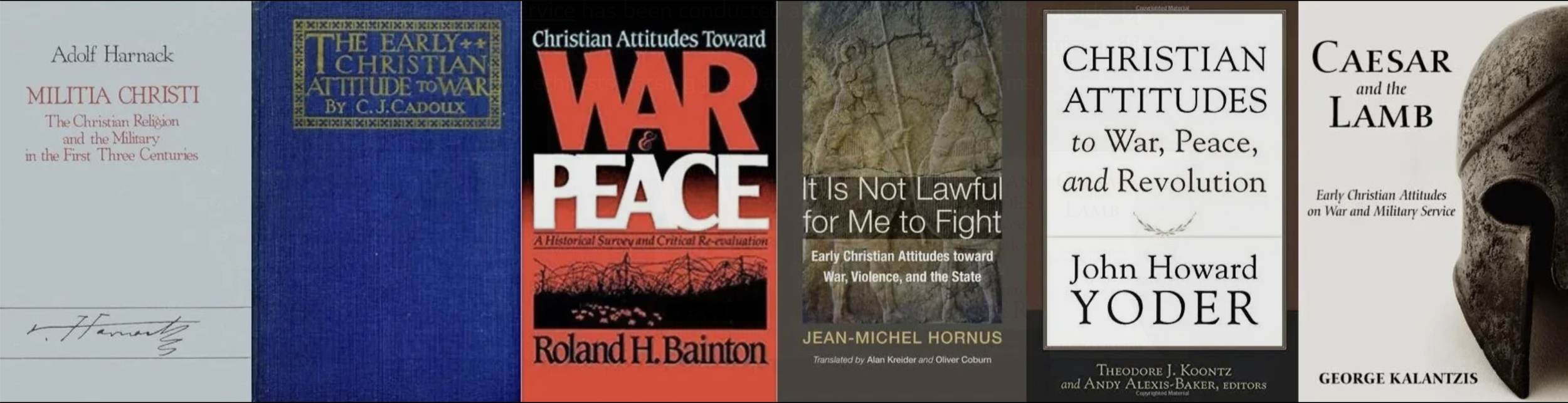
What it has not produced — what it has consistently failed to produce — is constructive theology arising from within military formation itself. Not narrative. Not confession. Not some feel-good story of a veteran who found his way to a more acceptable theological position. Argument. Method. A hermeneutic that could only be made credibly by someone shaped by what service actually does to a person.
The essay was declined. That's fine. Editors decline things.
What's worth naming is what happened when I followed up to ask whether the piece had received substantive consideration. The response was the standard language: not suited to current needs, thank you for the opportunity. No engagement with the argument. No indication of what "current needs" meant or whether the gap I was describing — the absence of constructive martial theology in a century of Christian discourse — was something they recognized or disputed.
I'm not describing a grievance. I'm describing a structure.
The same publication reviewed my first book in 2012. That book was a confessional narrative — a veteran's journey toward conscientious objection, a feel-good story of departure from military identity toward something the civilian gaze found more legible. It fit. It was reviewed warmly by a respected Catholic scholar. The review mentioned a conference I had organized — one of the first major ecumenical gatherings specifically on veteran conscience — as a matter of record.
What I submitted recently was not that kind of work. It was an argument that the very framework those reviewers inhabited — the civilian scholarly consensus on war, conscience, and Christian formation — has a structural blind spot, and that the blind spot is the community I come from. Fourteen years later, the gate is still open for the story of a veteran who came around. It is not open for the veteran who shows up to argue on his own terms.
This is not unique to one magazine or one rejection. It is the operating logic of most Christian publishing and most Christian theological discourse when it comes to military families. The only acceptable veteran is the one who confirms what the civilian institution already believes: that military service is morally compromised, that the thoughtful veteran is the one who questions or departs, that testimony from within the formation is raw material to be processed and commodified by credentialed outsiders rather than a theological resource in its own right.
I don't think most editors who decline pieces like mine are acting in bad faith. I think they are operating inside a framework so normalized it is invisible to them. Civilian theological consensus on military service is not experienced as a perspective — it is experienced as the baseline from which deviation requires justification. That is the nature of civilian bias. The veteran who confirms it gets published. The veteran who challenges it gets "not suited to our current needs."
There is an old story about a man who was blind from birth. When he receives his sight, the religious authorities interrogate him — not to celebrate what happened, but to protect the framework that says miracles cannot happen outside their control. They ask his parents. They ask him twice. Finally, in frustration, they ask whether he's calling them blind. If you were blind, he tells them, you would have no responsibility. But now that you say you see, you can't claim ignorance.
The tragedy in that story is not the authorities who have already closed themselves off. It's the ones still asking the question. Those are the people the good news is for — the editors, the theologians, the denominational gatekeepers who can feel something shifting, who sense that the voices they've been filtering out are carrying something they need, but haven't yet found the institutional courage or the personal framework to let them in.
The gate is not locked. It has just been treated for so long as a wall that people have forgotten it opens. That's worth more than a rejection letter. That's worth a series.